Door Pin Receptacles and Structural Beams

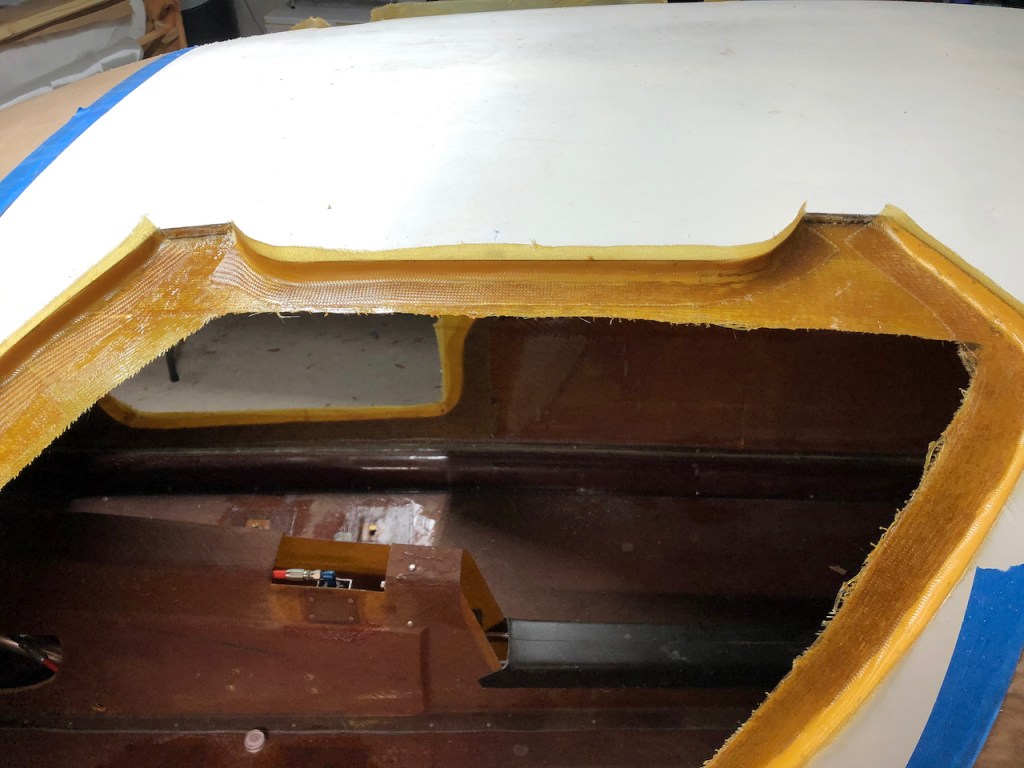
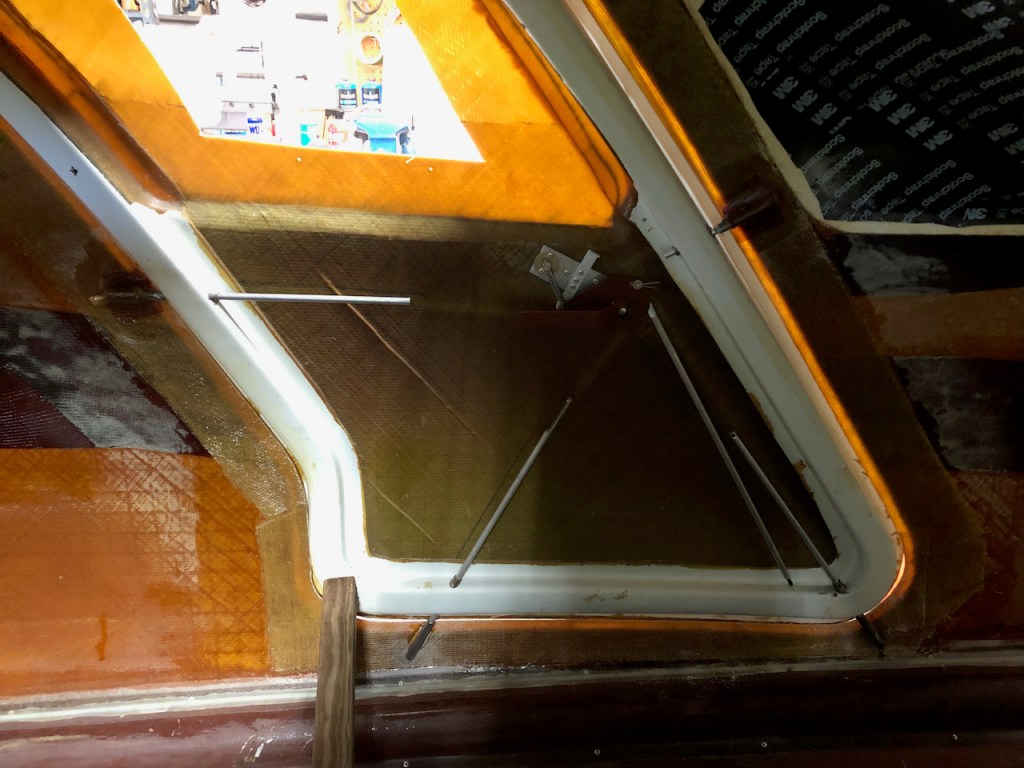
With the doors in place, the steel receptacle sleeves that will accept the door pins were positioned with wooden spacers, filleted in place with micro, and covered with BID.

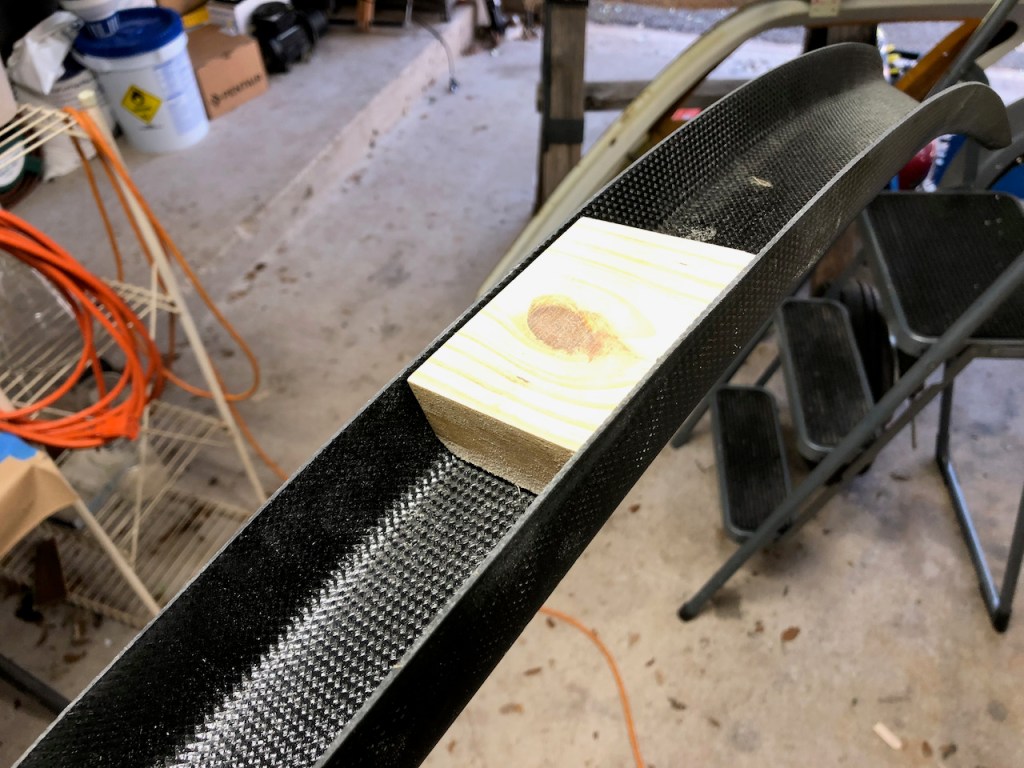
The carbon fiber structural members that fit around the doors and across the ceiling were sanded to fit the inner surface of the fuselage. The seat belt hard points mounts were fabricated from wood shaped to fit inside the carbon beam.

Cowling and Door Flanges

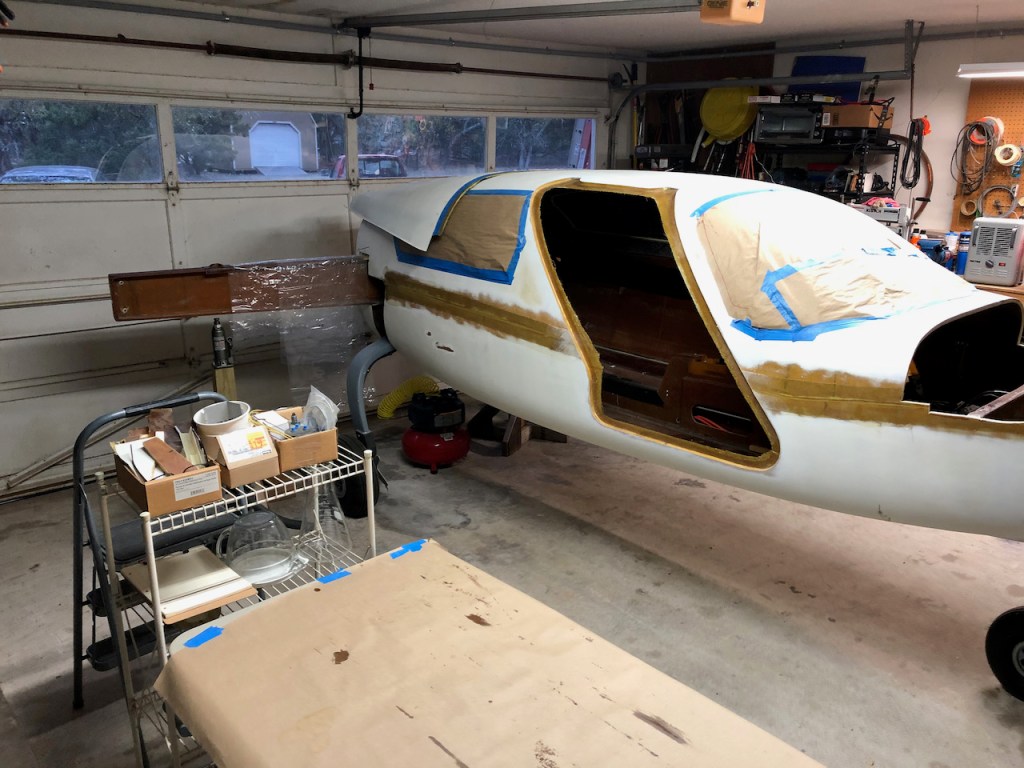
The cowling top half was cut at the proper distance from the firewall, with hot glue retainers added to keep it in place as the cut progressed. The inner surface next to the firewall was then protected with duct tape, and a wet tape was used to make a flange. After curing, the fuselage and flange were drilled for clecoes, the cowling was removed, and sanded to clean up.

The door cutouts were hot-glued back in place after covering their inside surfaces with duct tape. Layup tape was then used to create an inner door flange.

Joining Fuselage Halves II

After the interior micro and tapes cured during a very nice Christmas break, it was time to finish the outside join line.

The duct tape was removed and the join area was sanded flush and smooth. Micro was smoothed on to fill and voids, followed by BID layups and peel ply along the entire perimeter. As well, the join along the roof and the firewall flange was sanded and bonded with layups.

Joining Fuselage Halves

With the fuselage halves clecoed, coarse accessory holes were cut where the door openings will be to provide access to the inside.

A vat of micro was prepared, as well as some BID layup tapes. The clecoes were removed and micro was applied to the top of the firewall flange. Duct tape was then applied to the exterior fuselage seam to prevent too much squish-out of micro. Clecoes were re-attached and micro was applied to fill the seam between the fuselage halves, smoothed, and covered with a layup.

Preparation of Top Fuselage Half

I am trying to keep with the philosophy of doing as much as possible with the two fuselage halves before joining. A double layer of fine BID was placed around the periphery of the windows to provide more skin thickness for the interior trim to mount to. This was an excellent suggestion by Ron Stacy, who has shared many valuable build tips with me. The midline NACA air scoop was also fitted and glued in place.

Fresh Air Door and Ducting

Instead of a nose-mounted oil cooler, I am using that location for a fresh-air inlet with a variable-opening door. I fabricated a door for the inlet using a foam-core sandwich panel, fit it to the opening in the fuselage, and attached it with a hinge just forward of the opening.

A fresh air distribution box was fabricated with flanges to attach to the fuselage and holes for standard SCAT ducts to route the fresh air.